
Townhall Uniform experience
Figma Prototype
This case study explores the transformation of Townscript into Townhall, an all-encompassing platform for virtual, in-person, and hybrid events. Originally a DIY event ticketing platform in India, Townscript recognized the need to expand its services in response to the Covid-19 pandemic. We developed a comprehensive solution for virtual and hybrid events while prioritizing a seamless user experience. The rebranding of the product to Townhall required the integration of both Townscript and Townhall into a unified event creation flow.
This study focuses on the strategies and considerations that enabled Townhall to successfully navigate this transformation and highlights the importance of user experience during the transition.
This case study explores the transformation of Townscript into Townhall, an all-encompassing platform for virtual, in-person, and hybrid events. Originally a DIY event ticketing platform in India, Townscript recognized the need to expand its services in response to the Covid-19 pandemic. We developed a comprehensive solution for virtual and hybrid events while prioritizing a seamless user experience. The rebranding of the product to Townhall required the integration of both Townscript and Townhall into a unified event creation flow.
This study focuses on the strategies and considerations that enabled Townhall to successfully navigate this transformation and highlights the importance of user experience during the transition.
My Role
By this time I was working as a Product Designer (PD I) with couple of years of experience here in townhall. So I had deep understanding of the entire product lifecycle. It was helpful that I took the time to familiarize myself with the product and recognized the need to rethink the UX specifically for the identified problem.
“How might we streamline event customization and ticket management to provide organizers with a seamless experience while creating and managing their events?”
The rebranding of Townscript to Townhall posed challenges and confusion for users, particularly in the ticket creation flow when transitioning from event to end-to-end conference. Users were dissatisfied with the need to create an event first and then request its conversion to a conference, resulting in a poor user experience. To address this issue and enhance user satisfaction, the platforms needed to be merged and the general and specific event dashboards redesigned to provide informative and intuitive guidance throughout the event creation process. Conducting a event creation flow audit was essential to identify gaps in the current user experience and determine areas for improvement, ultimately achieving a seamless experience for users.
The rebranding of Townscript to Townhall posed challenges and confusion for users, particularly in the ticket creation flow when transitioning from event to end-to-end conference. Users were dissatisfied with the need to create an event first and then request its conversion to a conference, resulting in a poor user experience. To address this issue and enhance user satisfaction, the platforms needed to be merged and the general and specific event dashboards redesigned to provide informative and intuitive guidance throughout the event creation process. Conducting a event creation flow audit was essential to identify gaps in the current user experience and determine areas for improvement, ultimately achieving a seamless experience for users.
Problem Statement
Overview: The event creation flow appears to be straightforward, allowing users to add basic event details, media, and tickets. After creating the event, users are redirected to the event dashboard, which provides essential information for managing the event. However, there are pain points and issues related to event customization, specifically regarding event-specific features and ticket management.
The UX audit highlights the areas of improvement needed to enhance the user experience for event organizers.
UX Audit
Lack of clarity in event setup 🔥🔥
After creating an event, organizers are redirected to the event dashboard, which provides general event information but lacks specific guidance on setting up event-specific elements like lounge, booth, and other customization options. This lack of clarity can leave organizers unsure about where and how to set up these elements.
Inefficient workflow for event customization 🔥🔥
To access and customize event-specific features, organizers have to convert the event into a conference and then switch to a different dashboard, the EPAC dashboard. This transition disrupts the workflow and adds unnecessary steps for organizers, causing confusion and potential frustration.
Ticket management complexities 🔥🔥🔥
The process of creating new tickets presents a challenge. Organizers are required to switch back to the previous dashboard on the Townscript platform to make changes to the tickets and then return to the EPAC dashboard. This back-and-forth movement can be time-consuming and inefficient.
Limited flexibility in event creation 🔥🔥
The current event creation flow seems to require organizers to make numerous decisions upfront, potentially overwhelming them. Organizers may prefer a more flexible approach, where they can set up a basic event and gradually add more elements later as needed, allowing for iterative event planning.
From cognition POV what things are missing?
Principle of visibility
Principle of feedback
Principle of consistency
Principle of connectedness
Principle of affordance
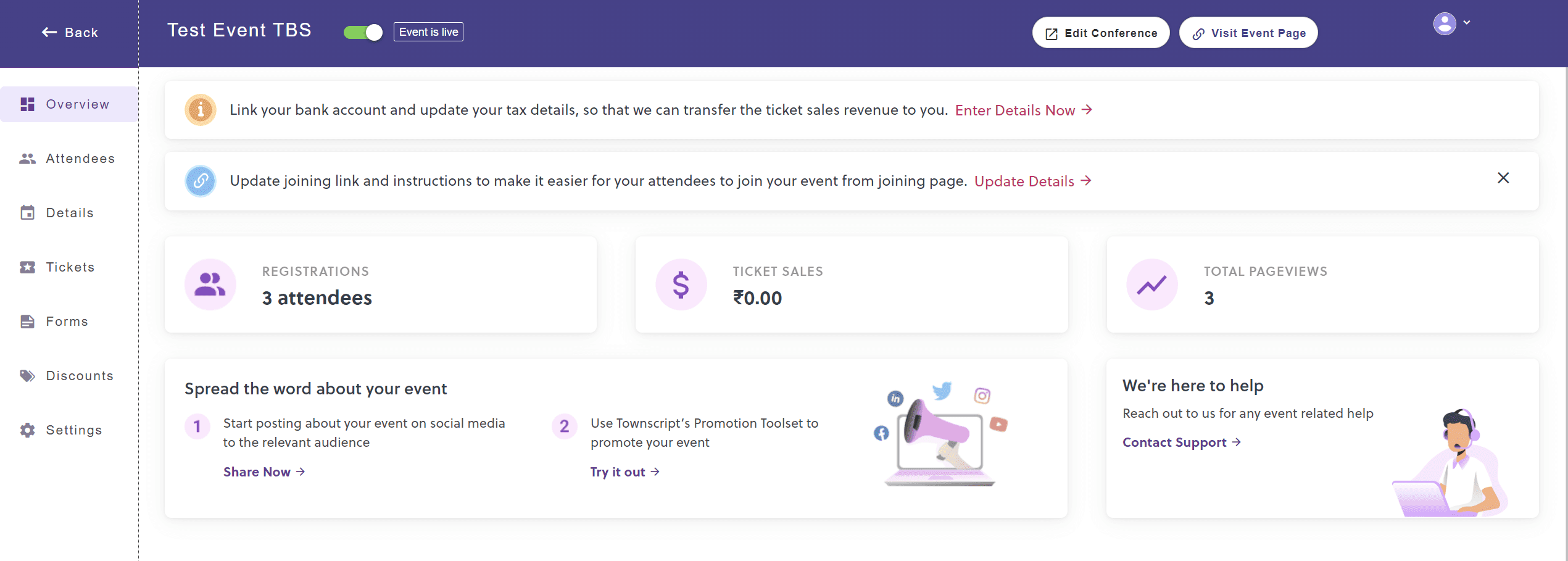
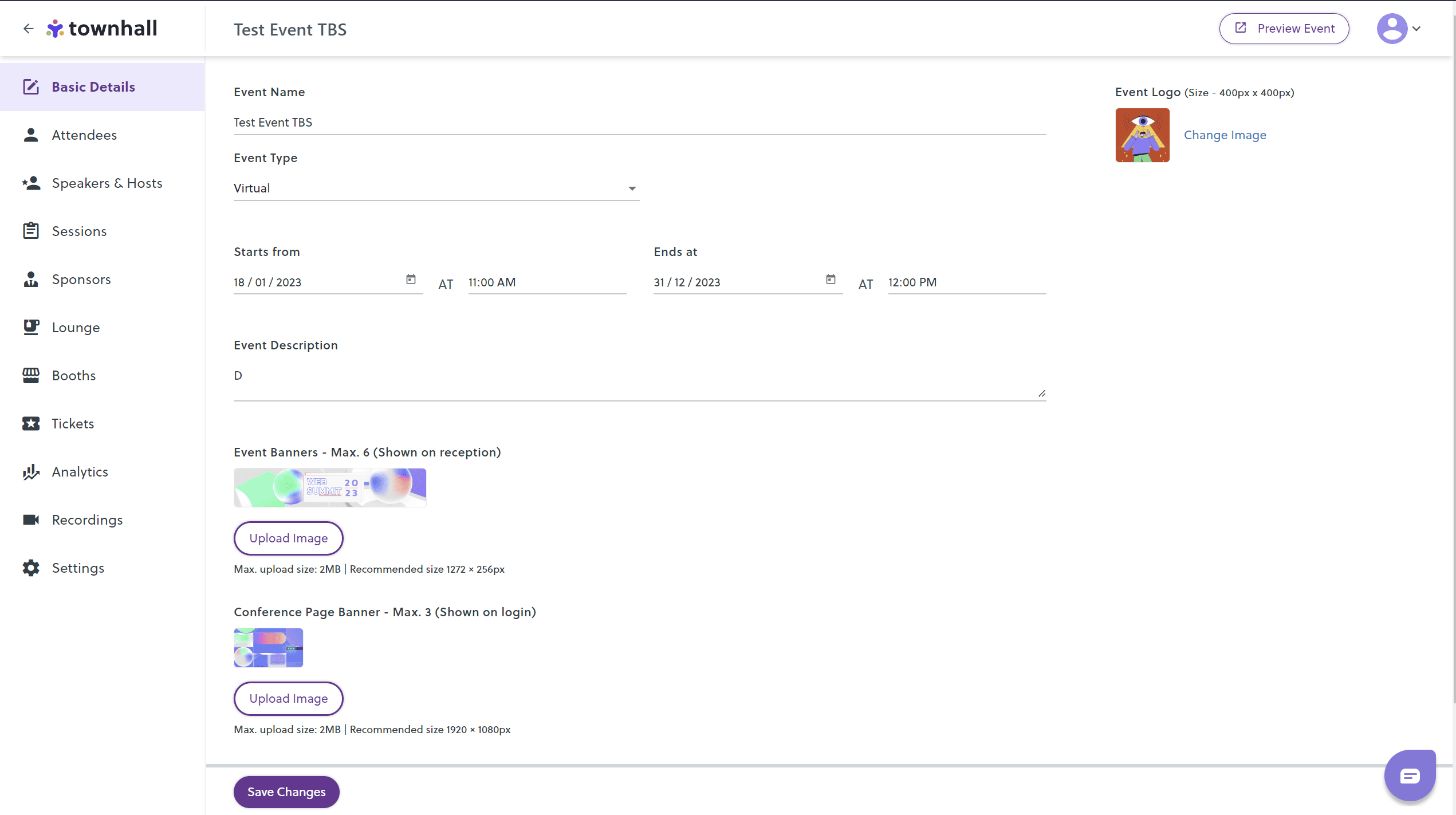
Switching between two different dashboards for the same event setup
Switching between two different dashboards
for the same event setup
The rebranding of Townscript to Townhall posed challenges and confusion for users, particularly in the ticket creation flow when transitioning from event to end-to-end conference. Users were dissatisfied with the need to create an event first and then request its conversion to a conference, resulting in a poor user experience. To address this issue and enhance user satisfaction, the platforms needed to be merged and the general and specific event dashboards redesigned to provide informative and intuitive guidance throughout the event creation process. Conducting a event creation flow audit was essential to identify gaps in the current user experience and determine areas for improvement, ultimately achieving a seamless experience for users.
Scoping down
To address the identified pain points and achieve a seamless user experience, a viable solution would be to merge the existing Townscript and Townhall platforms into a unified event creation flow. This solution should be easily deliverable within a specific timeframe and allow developers to utilize the previous build while integrating the new event creation solution. The focus should be on simplifying the ticket creation process, integrating event-specific features into a single dashboard, resolving the ticketing problem, and providing a user-friendly approach to event setup that allows for incremental additions.
Iterations
The goal was to create a seamless user experience by merging multiple products into one cohesive flow. The solution had to be deliverable within a specific timeframe while allowing developers to merge the existing build with the new event creation solution.
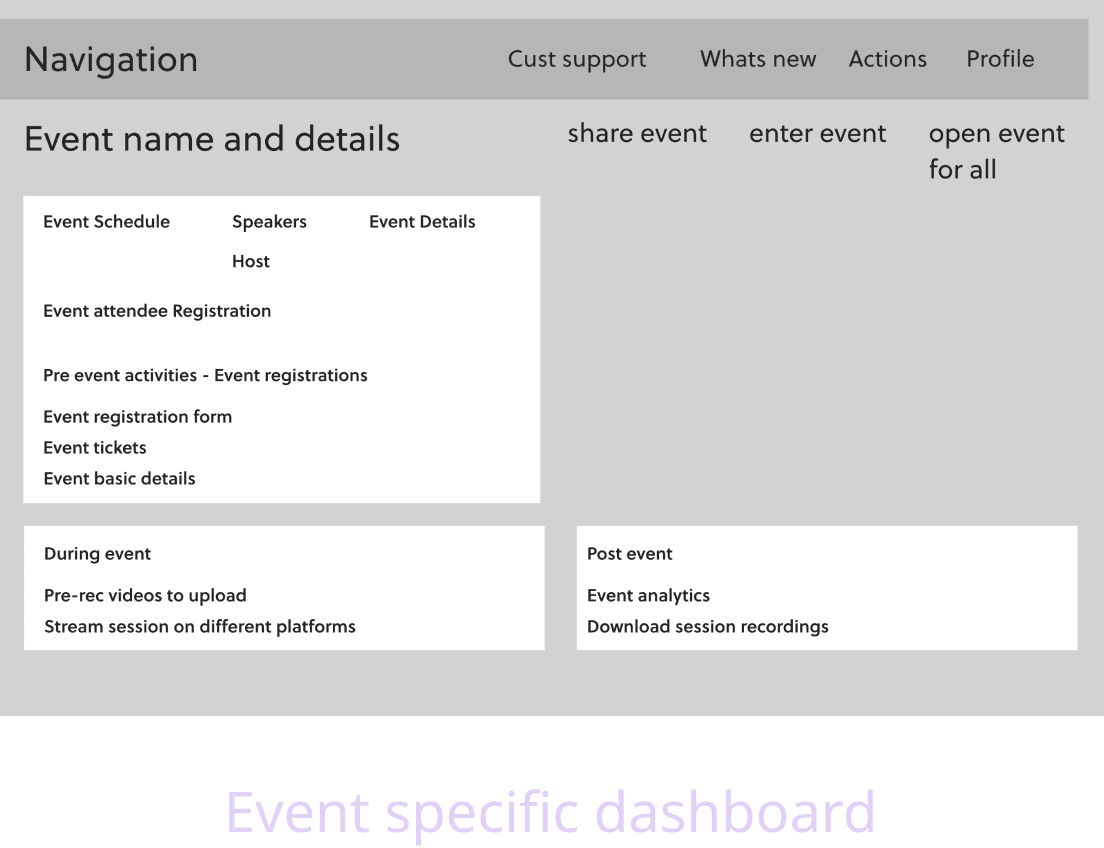
The process involved creating an information flow diagram to organize operations into different buckets. Low-fidelity frames were then used to visualize the event creation flow and iterate on it. However, after conducting audits, it became clear that the workflow needed to be more effective and reduce decision-making burdens for organizers. Only the mandatory information to capture initially to reduce cognitive load.
Provide clear instructions and guidance within the event dashboard to assist organizers in setting up event-specific elements.
Consolidate event customization features within a single dashboard, eliminating the need to switch between different interfaces and reducing confusion.
Enable ticket creation and management directly within the EPAC (Event specific dashboard) dashboard to streamline the process and avoid unnecessary navigation.
Offer a more flexible event creation process that allows organizers to start with a basic event setup and easily add more elements or make changes as needed.
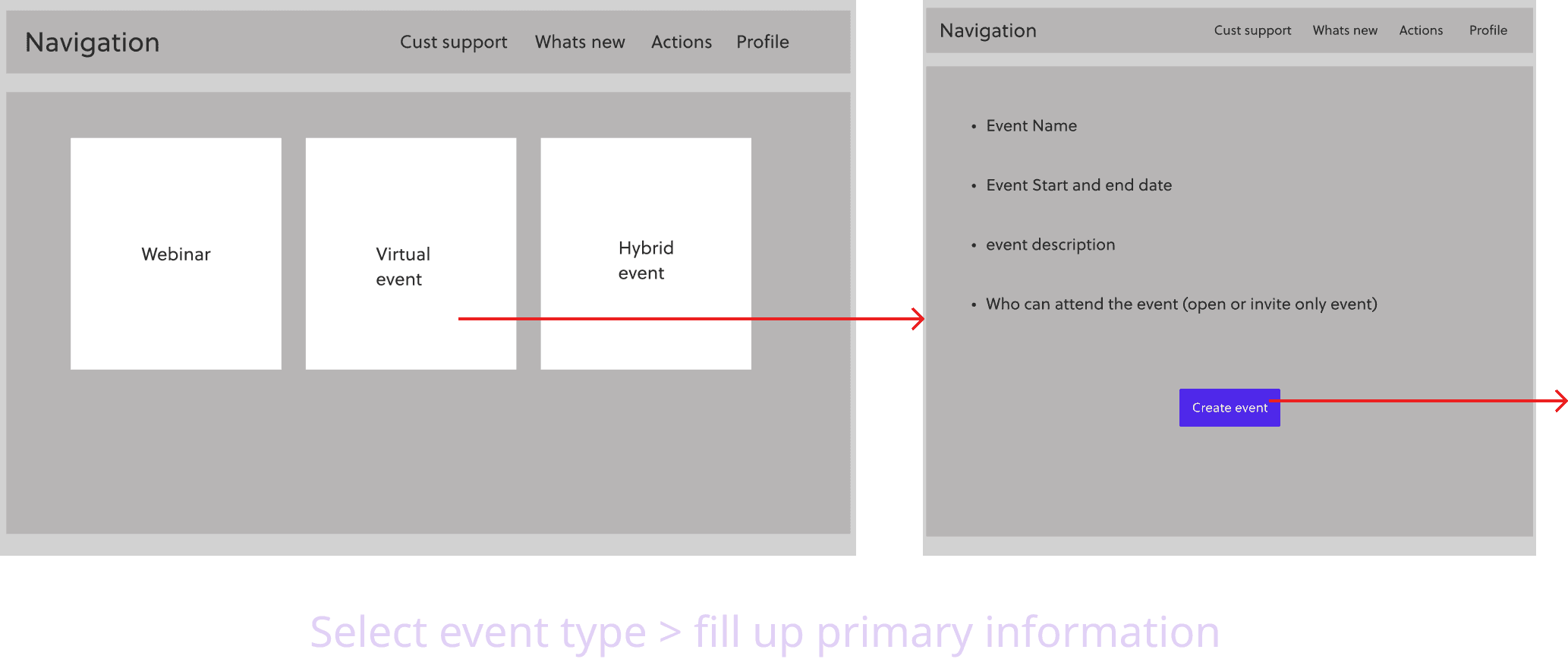
Final Iteration
The architecture and event creation flow were modified to address these concerns, despite the additional tasks for developers. The second iteration focused on organizing information into categorized buckets such as event registration, event ticketing, and event settings. The aim was to provide a simplified event creation experience for users with varying levels of digital literacy, spanning from non-tech to tech backgrounds. The team was convinced of the need for these significant changes, ensuring a streamlined and user-friendly event creation process.
Crafting the pixels
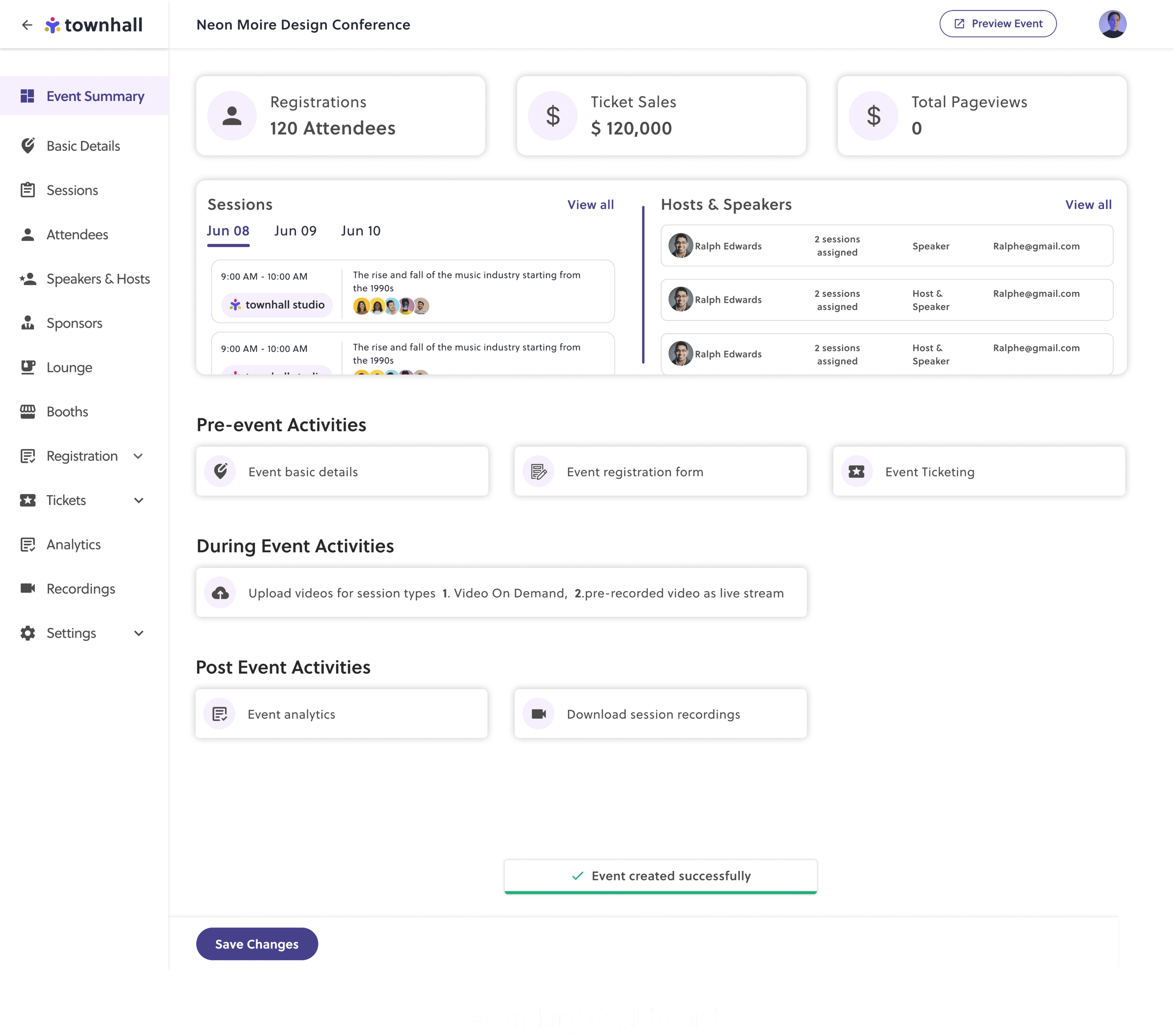
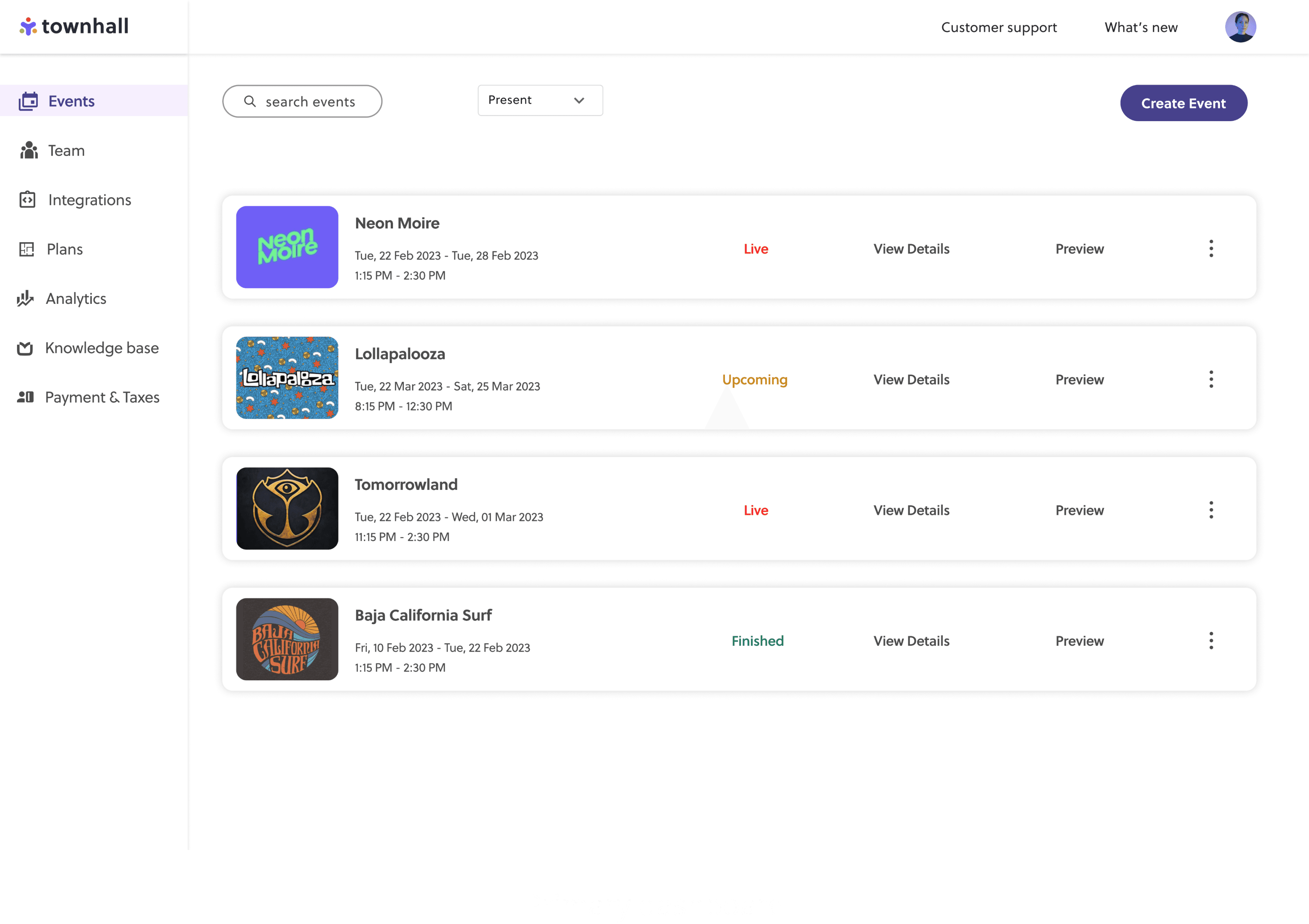
I improved the event creation dashboard by streamlining the flow and reducing the number of elements on each screen. This approach provided clear guidance and enhanced understanding of the system, enabling successful event creation with minimal complexity. The focus was on balancing informative content and simplicity, allowing organizers to navigate through the setup efficiently without feeling overwhelmed.
The event-specific dashboard, EPAC, played a crucial role in presenting information effectively. It maintained a harmonious blend of visual and textual elements, ensuring legibility, scanability, and intuitive interactions. The priority was to provide a clear visbility of system status.
Reducing any confusion in the information-rich event dashboards. The objective is to empower organizers to quickly navigate tabs and effortlessly configure event-related details, freeing them to concentrate on the event rather than technical complexities. Currently the project is in the beta stage and plan is to launch it soon withing next 4 months.
Check out the figma prototype
Crafting the pixels
I improved the event creation dashboard by streamlining the flow and reducing the number of elements on each screen. This approach provided clear guidance and enhanced understanding of the system, enabling successful event creation with minimal complexity. The focus was on balancing informative content and simplicity, allowing organizers to navigate through the setup efficiently without feeling overwhelmed.
The event-specific dashboard, EPAC, played a crucial role in presenting information effectively. It maintained a harmonious blend of visual and textual elements, ensuring legibility, scanability, and intuitive interactions. The priority was to provide a clear visbility of system status.
Reducing any confusion in the information-rich event dashboards. The objective is to empower organizers to quickly navigate tabs and effortlessly configure event-related details, freeing them to concentrate on the event rather than technical complexities. Currently the project is in the beta stage and plan is to launch it soon withing next 4 months.
Check out the figma prototype
Townhall Uniform experience
This case study explores the transformation of Townscript into Townhall, an all-encompassing platform for virtual, in-person, and hybrid events. Originally a DIY event ticketing platform in India, Townscript recognized the need to expand its services in response to the Covid-19 pandemic. We developed a comprehensive solution for virtual and hybrid events while prioritizing a seamless user experience. The rebranding of the product to Townhall required the integration of both Townscript and Townhall into a unified event creation flow. This study focuses on the strategies and considerations that enabled Townhall to successfully navigate this transformation and highlights the importance of user experience during the transition.
Figma Prototype
My Role
By this time I was working as a Product Designer (PD I) with couple of years of experience here in townhall. So I had deep understanding of the entire product lifecycle. It was helpful that I took the time to familiarize myself with the product and recognized the need to rethink the UX specifically for the identified problem.
The rebranding of Townscript to Townhall posed challenges and confusion for users, particularly in the ticket creation flow when transitioning from event to end-to-end conference. Users were dissatisfied with the need to create an event first and then request its conversion to a conference, resulting in a poor user experience. To address this issue and enhance user satisfaction, the platforms needed to be merged and the general and specific event dashboards redesigned to provide informative and intuitive guidance throughout the event creation process. Conducting a event creation flow audit was essential to identify gaps in the current user experience and determine areas for improvement, ultimately achieving a seamless experience for users.
Problem Statement
“How might we streamline event customization and ticket management to provide organizers with a seamless experience while creating and managing their events?”
Overview: The event creation flow appears to be straightforward, allowing users to add basic event details, media, and tickets. After creating the event, users are redirected to the event dashboard, which provides essential information for managing the event. However, there are pain points and issues related to event customization, specifically regarding event-specific features and ticket management.
The UX audit highlights the areas of improvement needed to enhance the user experience for event organizers.
UX Audit
Lack of clarity in event setup 🔥🔥
After creating an event, organizers are redirected to the event dashboard, which provides general event information but lacks specific guidance on setting up event-specific elements like lounge, booth, and other customization options. This lack of clarity can leave organizers unsure about where and how to set up these elements.
Inefficient workflow for event customization
🔥🔥
To access and customize event-specific features, organizers have to convert the event into a conference and then switch to a different dashboard, the EPAC dashboard. This transition disrupts the workflow and adds unnecessary steps for organizers, causing confusion and potential frustration.
Ticket management complexities 🔥🔥🔥
The process of creating new tickets presents a challenge. Organizers are required to switch back to the previous dashboard on the Townscript platform to make changes to the tickets and then return to the EPAC dashboard. This back-and-forth movement can be time-consuming and inefficient.
Limited flexibility in event creation 🔥🔥
The current event creation flow seems to require organizers to make numerous decisions upfront, potentially overwhelming them. Organizers may prefer a more flexible approach, where they can set up a basic event and gradually add more elements later as needed, allowing for iterative event planning.
To address the identified pain points and achieve a seamless user experience, a viable solution would be to merge the existing Townscript and Townhall platforms into a unified event creation flow. This solution should be easily deliverable within a specific timeframe and allow developers to utilize the previous build while integrating the new event creation solution. The focus should be on simplifying the ticket creation process, integrating event-specific features into a single dashboard, resolving the ticketing problem, and providing a user-friendly approach to event setup that allows for incremental additions.
Scoping down
Provide clear instructions and guidance within the event dashboard to assist organizers in setting up event-specific elements.
Consolidate event customization features within a single dashboard, eliminating the need to switch between different interfaces and reducing confusion.
Enable ticket creation and management directly within the EPAC (Event specific dashboard) dashboard to streamline the process and avoid unnecessary navigation.
Offer a more flexible event creation process that allows organizers to start with a basic event setup and easily add more elements or make changes as needed.
Iterations
The goal was to create a seamless user experience by merging multiple products into one cohesive flow. The solution had to be deliverable within a specific timeframe while allowing developers to merge the existing build with the new event creation solution.
The process involved creating an information flow diagram to organize operations into different buckets. Low-fidelity frames were then used to visualize the event creation flow and iterate on it. However, after conducting audits, it became clear that the workflow needed to be more effective and reduce decision-making burdens for organizers.
Final Iteration
The architecture and event creation flow were modified to address these concerns, despite the additional tasks for developers. The second iteration focused on organizing information into categorized buckets such as event registration, event ticketing, and event settings. The aim was to provide a simplified event creation experience for users with varying levels of digital literacy, spanning from non-tech to tech backgrounds. The team was convinced of the need for these significant changes, ensuring a streamlined and user-friendly event creation process.
Check out the figma prototype
Crafting the pixels
I improved the event creation dashboard by streamlining the flow and reducing the number of elements on each screen. This approach provided clear guidance and enhanced understanding of the system, enabling successful event creation with minimal complexity. The focus was on balancing informative content and simplicity, allowing organizers to navigate through the setup efficiently without feeling overwhelmed.
The event-specific dashboard, EPAC, played a crucial role in presenting information effectively. It maintained a harmonious blend of visual and textual elements, ensuring legibility, scanability, and intuitive interactions. The priority was to provide a clear visbility of system status.
Reducing any confusion in the information-rich event dashboards. The objective is to empower organizers to quickly navigate tabs and effortlessly configure event-related details, freeing them to concentrate on the event rather than technical complexities. Currently the project is in the beta stage and plan is to launch it soon withing next 4 months.
From cognition POV what things
are missing?
Principle of visibility
Principle of feedback
Principle of consistency
Principle of connectedness
Principle of affordance
From cognition POV what things are missing?
Principle of visibility
Principle of feedback
Principle of consistency
Principle of connectedness
Principle of affordance